What is Bass Tablature?
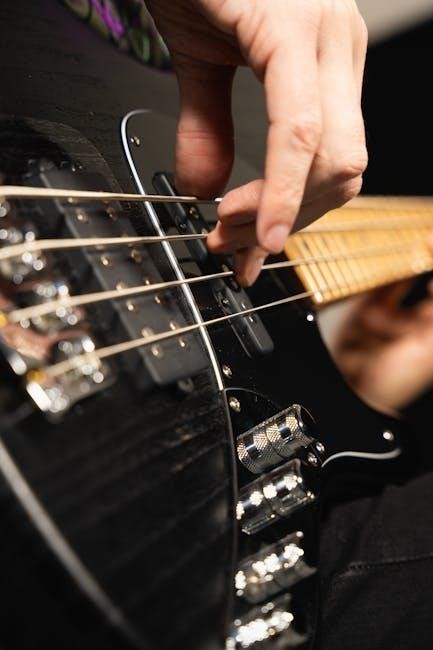
Bass tablature, often found as PDF documents, represents a simplified method for musicians to quickly learn and play bass lines,
avoiding traditional musical notation complexities․
It visually displays the strings of a bass guitar and indicates where to place fingers,
making it accessible for beginners and experienced players alike, especially when seeking readily available bass tablature PDFs․
These PDF resources often contain arrangements of popular songs, allowing bassists to easily access and practice their favorite tunes․
Understanding Bass Tablature Notation
Bass tablature, frequently distributed as PDF files, utilizes a unique system of lines representing the strings of the bass guitar․ These lines, typically four in number, correspond to the E, A, D, and G strings, with the lowest string (E) usually displayed at the bottom and the highest (G) at the top․
Numbers on these lines indicate the fret to be pressed down on that specific string․ For instance, a ‘3’ on the A string line means to press down on the third fret of the A string․ A ‘0’ signifies an open string – playing the string without pressing any frets․
PDF bass tabs often include symbols beyond numbers․ Horizontal lines connecting numbers on different strings indicate playing those notes simultaneously, forming chords; Other symbols denote techniques like slides, hammer-ons, pull-offs, and harmonics, enhancing the musical expression․
Understanding these core elements is crucial for effectively reading and interpreting bass tablature PDFs, allowing bassists to accurately reproduce the intended bass lines and explore a vast library of musical arrangements․
The History of Bass Tablature
The origins of bass tablature, now commonly found in PDF format, trace back to the need for a simplified notation system accessible to musicians without extensive music theory knowledge․ While guitar tablature existed earlier, bass tablature gained prominence in the 1960s and 70s alongside the rising popularity of bass guitar in rock and popular music․
Early forms were often hand-written and circulated amongst musicians, lacking standardization․ The advent of personal computers and the internet in the 1990s revolutionized its distribution, leading to the creation of websites dedicated to hosting and sharing bass tabs․
The PDF format became a popular choice for archiving and sharing tabs due to its universal readability and preservation of formatting․ Today, countless bass tablature PDFs are available online, representing a vast and collaborative effort by bassists worldwide to document and share musical arrangements․

Where to Find Bass Tablature PDFs
Bass tablature PDFs are readily accessible through numerous online resources, including dedicated websites, subscription services, and active online forums brimming with shared content․
These platforms offer a diverse collection of tabs, catering to various skill levels and musical preferences, making learning convenient․
Popular Websites Offering Free Bass Tabs
Numerous websites specialize in providing free bass tablature in PDF format or easily printable arrangements․ Ultimate-Guitar․com stands out as a massive repository, boasting a vast catalog contributed by users worldwide, covering countless songs across genres․ Songsterr presents interactive tabs with synchronized playback, allowing bassists to hear how the lines should sound, and offers downloadable PDF versions․
BassTabs․com is another dedicated resource, focusing specifically on bass guitar tabs, offering a clean interface and a substantial library․ These sites generally rely on community contributions, meaning accuracy can vary, so cross-referencing with other sources is often recommended․
Additionally, many guitar-focused websites, like GuitarTabUniverse, also include a significant selection of bass tabs alongside their guitar content․ While the quality and availability of bass tablature PDFs can fluctuate, these platforms provide excellent starting points for finding free resources to expand your repertoire․
Subscription-Based Bass Tablature Services
For bassists seeking highly accurate and professionally created tablature, subscription-based services offer a compelling alternative to free resources․ Services like TrueFire provide access to a curated library of bass lessons and transcriptions, often including downloadable PDF tabs․ These tabs are typically verified for accuracy and presented with clear notation․
Fender Play, while broader in scope, also incorporates bass lessons with accompanying tabs accessible through their platform․ Another option is Musicnotes․com, which sells individual bass tabs in PDF format, as well as offering a subscription for unlimited access to their catalog․
These paid services generally guarantee higher quality transcriptions and often include features like adjustable playback speed and looping, enhancing the learning experience․ While requiring a financial commitment, they provide a reliable source for precise bass tablature PDFs and structured learning materials․
Online Forums and Communities for Bass Tabs
Bass guitar forums and online communities represent a valuable, often free, resource for locating bass tablature in PDF format and other formats․ Websites like TalkBass․com host dedicated sections where users share tabs they’ve created or transcribed, frequently offering them as downloadable PDF files․ These tabs can range in accuracy, so verifying them against recordings is advisable․
Reddit’s r/bass community is another active hub where members regularly request and share bass tabs, including links to PDF documents․ Guitar Pro tabs are also commonly exchanged, which can be converted to a more readable format․
These platforms foster a collaborative environment, allowing bassists to connect, request specific songs, and contribute to a growing library of user-generated bass tablature PDFs․ However, due to the nature of user-submitted content, quality control can vary․

Types of Bass Tablature Available in PDF Format
Bass tablature PDFs cater to all skill levels, offering beginner-friendly arrangements, intermediate charts with more complex techniques, and advanced transcriptions of solos․
These PDF resources provide diverse musical styles, from classic rock to jazz, enabling bassists to expand their repertoire and technical abilities․
Tablature for Beginner Bassists
Bass tablature PDFs designed for beginners typically focus on simplicity and foundational skills․ These resources often feature songs with straightforward bass lines, utilizing only a few notes and common rhythms․ The goal is to introduce new players to the basics of reading tab and coordinating their left and right hands․
Beginner tabs frequently emphasize open strings and the lower frets, minimizing the need for complex finger stretches or advanced techniques․ Many PDFs will include diagrams illustrating proper finger placement on the fretboard, alongside the tab itself․
Popular song choices for beginner bassists in PDF format include classic rock anthems and simple pop tunes․ These selections are chosen for their recognizable melodies and relatively easy-to-learn bass parts․ Furthermore, these tabs often include simplified rhythmic notation, focusing on quarter notes and eighth notes to build a solid rhythmic foundation․ Learning from these PDFs builds confidence and encourages continued practice․
Intermediate Level Bass Tabs
Intermediate bass tablature PDFs bridge the gap between beginner exercises and advanced compositions, introducing more complex techniques and musical concepts․ These resources typically feature songs with varied bass lines, incorporating techniques like hammer-ons, pull-offs, and slides․
You’ll find PDFs that demand greater finger dexterity and a more nuanced understanding of rhythm․ These tabs often include more intricate rhythmic patterns, such as sixteenth notes and syncopation, challenging players to refine their timing and groove․
Commonly, intermediate bass tablature PDFs will cover songs from genres like funk, blues, and progressive rock, exposing players to diverse musical styles․ They often require navigating the entire fretboard and utilizing more advanced chord voicings․ These PDFs are designed to expand a bassist’s technical skills and musical vocabulary, preparing them for more challenging material and encouraging improvisation․
Advanced Bass Tablature and Solo Transcriptions
Advanced bass tablature PDFs represent the pinnacle of bass learning resources, offering incredibly complex arrangements and detailed solo transcriptions․ These PDFs are geared towards highly skilled bassists seeking to master challenging pieces and expand their technical prowess․
Expect to encounter intricate bass lines featuring complex rhythms, advanced harmonic concepts, and demanding techniques like slapping, tapping, and harmonics․ Solo transcriptions within these PDFs provide note-for-note renditions of iconic bass solos, allowing players to study and replicate the phrasing and nuances of legendary bassists․
These resources often include songs from genres like jazz fusion, progressive metal, and complex rock, demanding a high level of musical understanding and technical proficiency․ PDFs at this level frequently incorporate multiple time signatures and unconventional song structures, pushing the bassist’s abilities to their absolute limit․

Reading and Interpreting Bass Tablature PDFs
Bass tablature PDFs utilize numbered lines representing strings; numbers indicate fret positions, guiding finger placement for accurate notes and rhythms․
Understanding these PDF notations unlocks the ability to decipher bass lines, enabling musicians to learn songs efficiently and effectively․
Decoding the Numbers on the Tablature
Bass tablature PDFs present a unique system where numbers on lines correspond directly to frets on the bass guitar․ Each line represents a string, typically with the highest string (E) at the bottom and the lowest (G) at the top – though this can sometimes vary, so always check the tab’s key․
These numbers aren’t arbitrary; they tell you exactly where to press down on each string․ A ‘0’ signifies an open string, meaning you play the string without pressing any frets․ A ‘1’ means you press down on the first fret, ‘2’ on the second, and so on․
When numbers are stacked vertically, it indicates that you play those notes simultaneously, forming a chord․ Horizontal numbers mean you play them sequentially, one after another․ Pay close attention to the spacing between numbers, as this can hint at the rhythm, though rhythmic notation is often separate or minimal in basic bass tablature PDFs․ Mastering this numerical code is the first step to unlocking the musical information contained within these valuable resources․
Understanding Rhythmic Notation in Bass Tabs
While bass tablature PDFs excel at showing where to play, rhythmic notation often requires a bit more interpretation․ Basic tabs frequently lack precise timing cues, relying on your ear and familiarity with the song․ However, more detailed tabs will incorporate symbols above the numbers to indicate note durations․
Common symbols include stems and flags, similar to standard music notation, representing quarter notes, eighth notes, and sixteenth notes․ A longer stem generally indicates a longer duration․ Dashes or beams can connect notes to show groupings and rhythmic patterns․
Sometimes, tabs use simple spacing to suggest rhythm – closer numbers imply faster playing, while wider gaps suggest longer notes․ Advanced bass tablature PDFs might include time signatures and bar lines for greater clarity․ Learning to decipher these rhythmic cues is crucial for accurately recreating the feel and groove of the original bass line․
Common Symbols and Their Meanings
Bass tablature PDFs often employ a shorthand of symbols to convey techniques beyond basic notes․ “h” signifies a hammer-on, where you strike a string with a finger without picking, creating a connected sound․ Conversely, “p” denotes a pull-off, lifting a finger to sound a lower note on the same string․
“s” represents a slide, smoothly moving your finger along the string to a different fret․ “b” indicates a bend, raising the string’s pitch by pushing it upwards․ Numbers in parentheses, like (5), often show a slight bend to that fret․
“/” and “” symbolize upstrokes and downstrokes with a pick, while “x” signifies a muted string․ Vibrato is often indicated with “~” over a note․ Understanding these symbols unlocks the nuances within the bass tablature PDF, allowing for a more accurate and expressive performance․
Software and Tools for Bass Tablature PDFs
Bass tablature PDFs are easily viewed with standard PDF readers, but specialized software enhances the experience with annotation features and editing capabilities․
Dedicated apps offer interactive playback and adjustable speeds, aiding learning, while editing software allows customization of bass tablature PDF arrangements․
PDF Readers with Annotation Features
When working with bass tablature PDFs, standard PDF readers like Adobe Acrobat Reader, Foxit Reader, and even web browser-based viewers offer valuable annotation features that significantly enhance the learning and practice process․
These features allow bassists to directly mark up the PDF, adding fingerings, rhythmic cues, or personal notes directly onto the tablature itself․ Highlighting sections for focused practice, circling challenging passages, or drawing arrows to indicate specific techniques become incredibly easy․
Furthermore, many PDF readers support adding text boxes for writing reminders or transposing sections․ The ability to utilize different colored highlights can categorize sections by difficulty or musical form․ Saving these annotated bass tablature PDFs preserves your personalized learning journey, creating a customized resource tailored to your individual needs and progress․ This interactive approach transforms a static document into a dynamic learning tool․
Consider utilizing cloud-based PDF editors for seamless access across multiple devices, ensuring your annotated bass tablature PDFs are always within reach․
Bass Tablature Editing Software
For bassists who need more than simple annotation, dedicated bass tablature editing software provides powerful tools for creating, modifying, and sharing bass tablature PDFs․ Programs like Guitar Pro, TuxGuitar (open-source), and TablEdit offer comprehensive features beyond basic PDF viewing․
These applications allow users to not only view PDF tabs but also to edit existing ones, correct errors, or even create tabs from scratch․ Features include precise rhythmic control, support for various tunings, and the ability to add effects and other musical notations․
Many programs can export tabs directly as PDF files, ensuring compatibility and easy sharing․ Some even offer audio playback, allowing you to hear how the tab should sound․ While these programs often require a learning curve, the increased control and flexibility they provide are invaluable for serious bassists and those involved in transcription or arrangement․
Investing in such software unlocks a deeper level of engagement with bass tablature PDFs․
Apps for Viewing and Playing Bass Tabs
Mobile apps have revolutionized access to bass tablature PDFs, offering convenience and portability for bass players on the go․ Several apps, like Ultimate Guitar Tabs & Chords, Songsterr, and BassTabs, specialize in displaying and playing tabs directly on smartphones and tablets․
These apps often feature extensive libraries of bass tablature PDFs, with synchronized scrolling, adjustable playback speed, and looping capabilities․ Many offer offline access to downloaded tabs, perfect for practice sessions without an internet connection․
Some apps include interactive features like backing tracks and the ability to transpose tabs to different keys․ While the free versions may contain ads or limited features, premium subscriptions unlock full access to the tab library and advanced functionalities․
These apps transform bass tablature PDFs into dynamic learning tools, enhancing practice and performance․

Legal Considerations and Copyright
Bass tablature PDFs, while widely shared, are subject to copyright laws protecting the original musical compositions․
Respecting musicians’ rights is crucial; unauthorized distribution of copyrighted bass tablature PDFs can lead to legal repercussions․
Fair use allows limited educational use․
Copyright Laws Regarding Bass Tablature
Copyright law fundamentally protects original musical works, extending to both the composition and the arrangement, which directly impacts bass tablature PDFs․ Creating a tab arrangement of a song without permission from the copyright holder – typically the songwriter or music publisher – constitutes copyright infringement․
This means simply transcribing a song into bass tablature PDF format and sharing it online, even without monetary gain, can be illegal․ The copyright owner has exclusive rights to reproduce, distribute, and create derivative works, including tablature․
However, the legal landscape can be complex․ Determining ownership can be challenging, especially with older songs or those with multiple contributors․ Furthermore, the act of creating a tab itself might be considered a transformative work, potentially falling under fair use, but this is highly dependent on specific circumstances and legal interpretation․ Always err on the side of caution and seek permission when possible, especially for commercial use of bass tablature PDFs․
Fair Use and Educational Purposes
Fair use doctrine allows limited use of copyrighted material, including songs transcribed into bass tablature PDFs, without requiring permission from the copyright holder․ This primarily applies to purposes like criticism, commentary, news reporting, teaching, scholarship, and research․
Educational use is a key aspect; a music teacher utilizing a bass tablature PDF in a classroom setting for instructional purposes is generally considered fair use․ However, simply distributing the PDF to students without proper licensing may still infringe on copyright․
The amount of material used, the nature of the copyrighted work, and the effect on the market for the original work are all factors considered when determining fair use․ Creating a complete bass tablature PDF of a popular song for widespread distribution is less likely to qualify than a small excerpt used for analytical purposes․ Always prioritize obtaining permission when possible, even for educational contexts․
Respecting the Rights of Bass Musicians
Bass tablature PDFs, while valuable learning tools, exist within a complex copyright landscape․ It’s crucial to acknowledge and respect the rights of the bass musicians and songwriters who created the original music․
Simply finding a bass tablature PDF online doesn’t grant free license to profit from it․ Selling transcriptions without permission is a clear copyright violation․ Supporting artists through legitimate channels – purchasing sheet music, albums, or concert tickets – directly contributes to their livelihood;
Many musicians rely on royalties from their work․ Using unauthorized bass tablature PDFs diminishes those earnings․ Consider supporting artists by seeking officially licensed tablature or, better yet, learning songs by ear to develop your musical skills․ Promoting ethical music consumption fosters a sustainable environment for bass musicians and ensures continued creativity․
Leave a Reply